The Scantec Method: How GPR and X-Ray Deliver the Most Accurate Concrete Scanning Results
Why Concrete Scanning Matters
Cutting or drilling concrete without scanning can lead to serious consequences, including:
Striking post-tension cables
Damaging live electrical conduits
Compromising structural elements
Project delays and costly repairs
Safety hazards and liability exposure
Professional concrete scanning in Calgary helps mitigate these risks and provides confidence before intrusive work begins.
GPR and X-Ray Together Provide Superior Concrete Scanning Results
Concrete scanning is not about using a single tool or relying on branded terminology. At Scantec, it’s about data quality, validation, and risk reduction. When locating rebar, post-tension cables, conduits, embeds, and voids, the safest and most accurate approach is a layered methodology that combines advanced GPR acquisition techniques with targeted X-Ray radiography.
No single method performs perfectly under all conditions. Concrete thickness, reinforcement density, moisture content, and access constraints all influence results. That’s why Scantec applies multiple complementary techniques, each improving confidence before any cutting, coring, or drilling takes place.
Ground Penetrating Radar (GPR): Scantec’s Foundation Tool
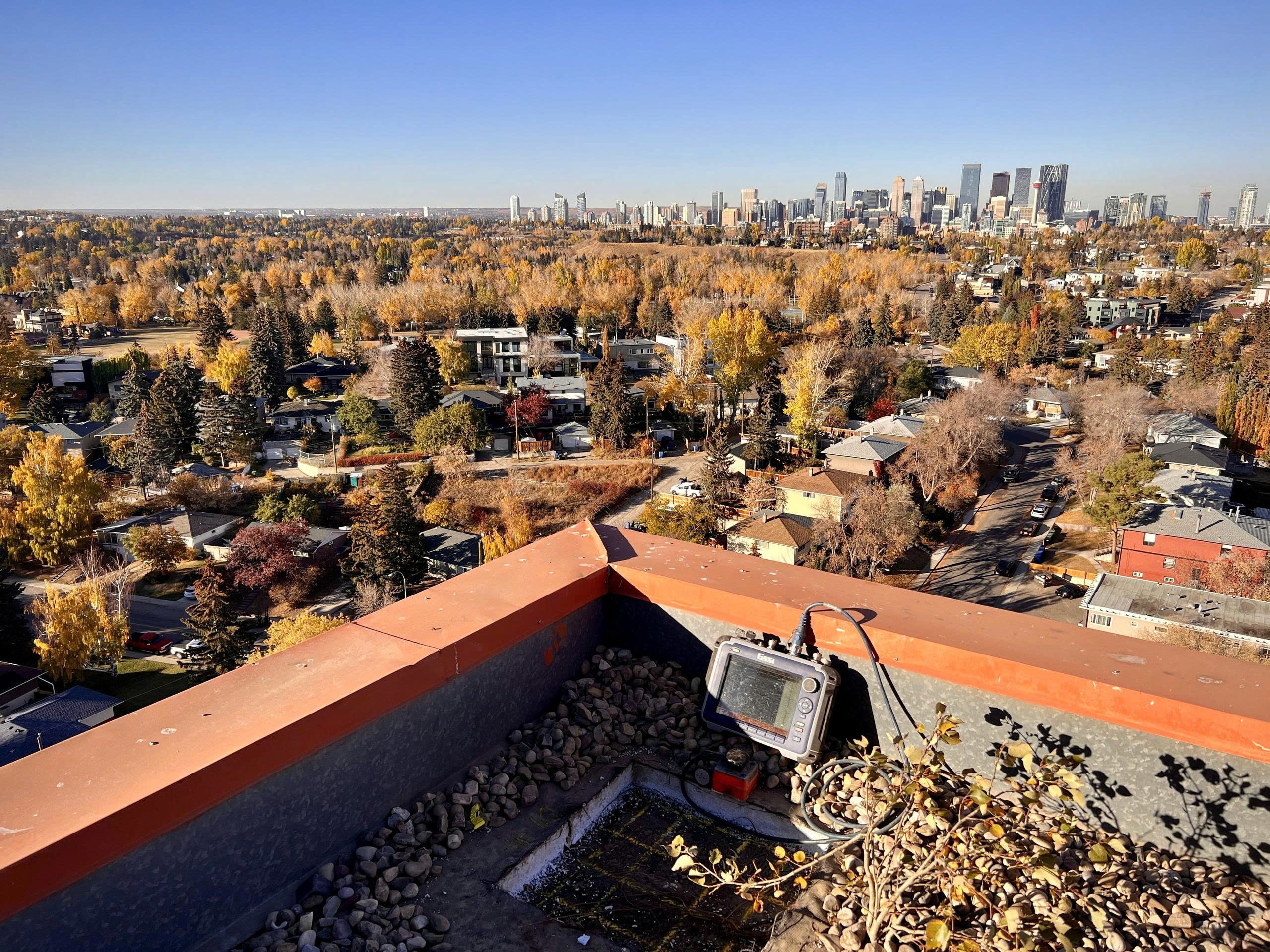
Scantec uses professional-grade GPR systems from manufacturers such as GSSI, operated by experienced technicians trained in both radar physics and structural behavior.
GPR works by transmitting electromagnetic waves into concrete and recording reflections caused by changes in material properties. These reflections appear as hyperbolic signatures that indicate embedded objects or interfaces.
What GPR does best:
Rapid, non-destructive scanning of large areas
Detection of metallic and non-metallic targets
Mapping relative depth and spacing
Identifying congested or anomalous zones
However, GPR is an indirect method. Data quality and interpretation improve significantly when advanced acquisition techniques are applied.
How GPR works?
Ground Penetrating Radar (GPR) sends electromagnetic waves into concrete and records the signals that bounce back from changes in material or density. GPR is especially useful because:
✔️ It’s fast and non-invasive — you can scan large areas quickly.
✔️ It shows relative depths — deeper objects produce reflections later in the scan profile.
✔️ It can detect many types of targets — metal, voids, changes in concrete density, and more. It’s often the first step in scanning large slabs.
However, GPR has limitations:
⚠️ Signal clarity can vary based on concrete composition, moisture, and reinforcement density.
⚠️ Depth interpretation is relative — it doesn’t always show exact depths without velocity calibration.
⚠️ It provides indirect evidence — the reflections need interpretation by an experienced technician.
Several Advanced Techniques to improve GPR Used by Scantec
1. Normal and Cross-Polarized GPR Scanning
Scantec routinely uses both normal and cross-polarized antenna orientations where appropriate.
Normal polarization produces strong reflections from metallic targets such as rebar and post-tension cables and is ideal for general reinforcement mapping.
Cross-polarization is achieved by rotating the antenna 90°, changing the orientation of the electromagnetic field.
Why cross-polarization helps:
Reduces dominant reflections from dense rebar mats
Improves visibility of weaker targets such as non-metallic conduits or slab-bottom interfaces
Provides an alternate perspective for interpretation
Important clarification:
Cross-polarization is still GPR. Rotating the antenna improves interpretation but does not create a new technology and does not replace direct imaging methods such as X-Ray.
2. Double-Sided GPR Scanning (Top & Bottom of Slab)
At Scantec, double-sided scanning means scanning both the top and the underside of a concrete slab, not merely scanning in two directions on the same surface.
This technique is used when underside access is available and higher confidence is required.
Benefits of scanning both sides:
Shorter radar travel paths to targets
Improved resolution of top and bottom reinforcement
Reduced masking from dense reinforcement layers
More reliable depth and slab-thickness interpretation
Cross-validation of critical targets
Common applications:
Parking structures and suspended slabs
Bridge decks
Mechanical rooms
Office-to-residential conversions
High-risk coring or drilling locations
Double-sided scanning significantly improves GPR data quality but remains an indirect method that benefits from further validation on critical locations.
3. 3D GPR Modeling and Large-Area Quality Control
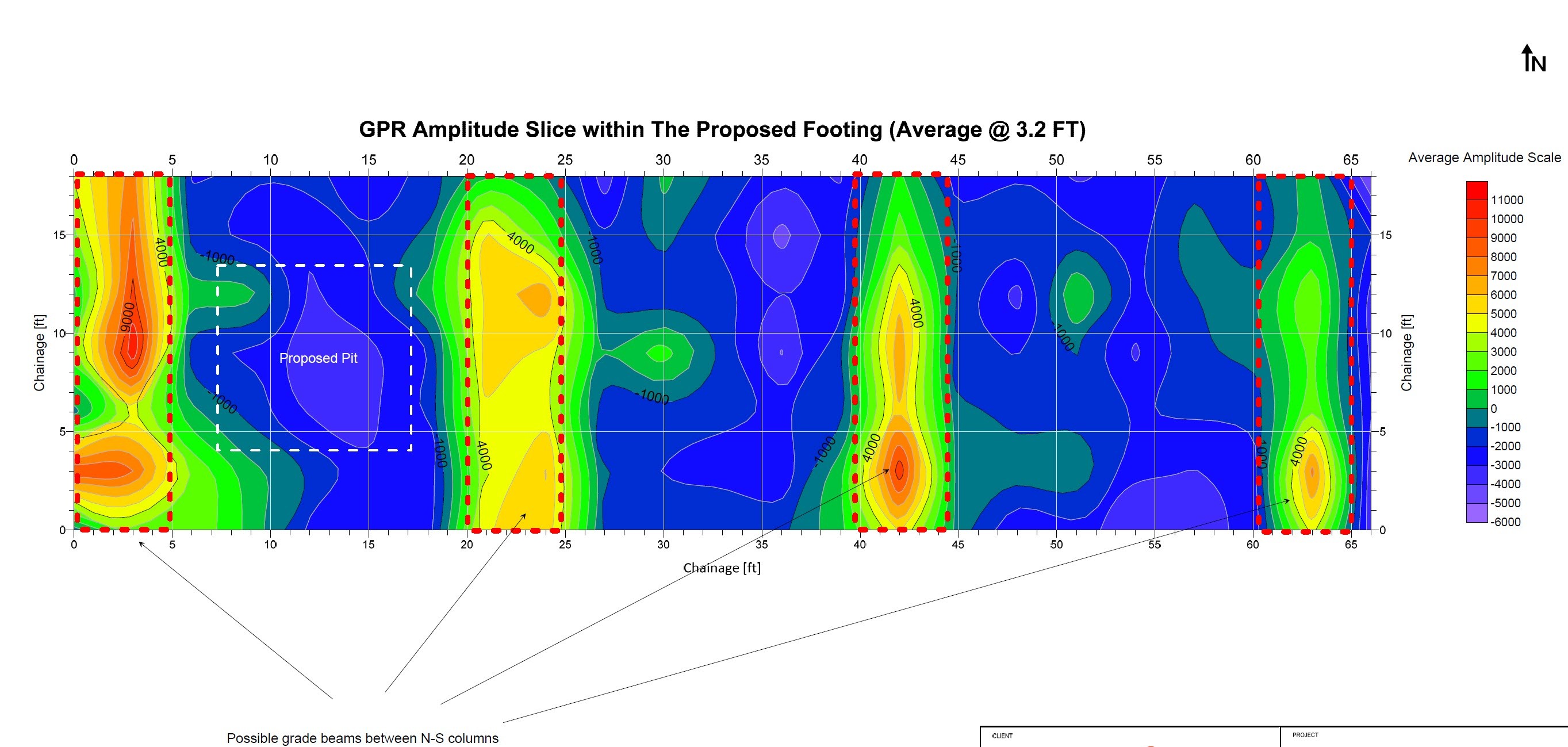
For large or complex projects, Scantec processes GPR data into 3D models and depth-slice visualizations.
3D modeling provides:
Horizontal depth slices at selected elevations
Visualization of reinforcement density patterns
Identification of anomalies not obvious in 2D profiles
Consistency checks across large scanned areas
This approach is particularly valuable for bridge decks, large floor plates, and infrastructure projects, where quality control across thousands of square metres is essential.
Understanding the Limits of Even Advanced GPR
Even with:
Cross-polarized scanning
Double-sided (top & bottom) acquisition
Dense line spacing
3D modeling and interpretation
GPR still relies on reflected electromagnetic energy, not direct imaging. In heavily congested slabs or high-risk penetrations, some uncertainty may remain.
That’s where X-Ray radiography becomes essential.
How X-Ray (Radiography) Works
X-Ray concrete scanning uses high-energy photons to penetrate concrete. A source and a detector are placed on opposite sides of a slab, and the resulting image shows the actual silhouettes of embedded objects.
Key strengths of X-Ray include:
📌 Direct imaging — you see the object’s outline, not just a reflection.
📌 Precise depth and position information — if you can place the detector correctly.
📌 High clarity for metal objects — rebar, cables, inserts, and post-tension tendons show up clearly.
But X-Ray is not perfect for every situation:
⚠️ Set-up and safety protocols are more complex than GPR.
⚠️ Coverage area per exposure is limited — you need multiple images for large areas.
⚠️ Radiation safety (ALARA protocols) must be strictly followed, requiring trained staff and shielding.
X-Ray Concrete Scanning: Scantec’s Validation Tool
X-Ray (radiography) uses high-energy photons to penetrate concrete and capture direct images of embedded objects on a digital detector.
What X-Ray adds:
Clear silhouettes of rebar, PT cables, conduits, and embeds
Precise positional and depth confirmation
Reduced interpretation ambiguity
Definitive validation for critical locations
Unlike GPR, X-Ray does not depend on polarization, antenna orientation, or signal interpretation — it directly images what is inside the slab.
Scantec’s Integrated Concrete Scanning Workflow
Broad GPR scanning using normal and cross-polarized orientations
Double-sided scanning when underside access is available
3D modeling and quality control on large areas
Engineering interpretation and risk assessment
Targeted X-Ray radiography for definitive confirmation
This layered approach ensures decisions are made using cross-validated data, not assumptions.
Conclusion — Best Practice for Concrete Scanning
The Scantec Standard
The most reliable concrete scanning is achieved by combining:
Advanced GPR techniques (polarization, double-sided scanning, 3D modeling)
Sound engineering interpretation
Targeted X-Ray radiography when precision is critical
At Scantec, we use:
GPR to see broadly
Advanced techniques to see clearly
X-Ray to see definitively
That’s how we reduce risk, protect structures, and keep projects moving safely.
Need Concrete Scanning in Calgary, Edmonton or Vancouver Area?
Reduce risk before cutting, coring, or drilling.
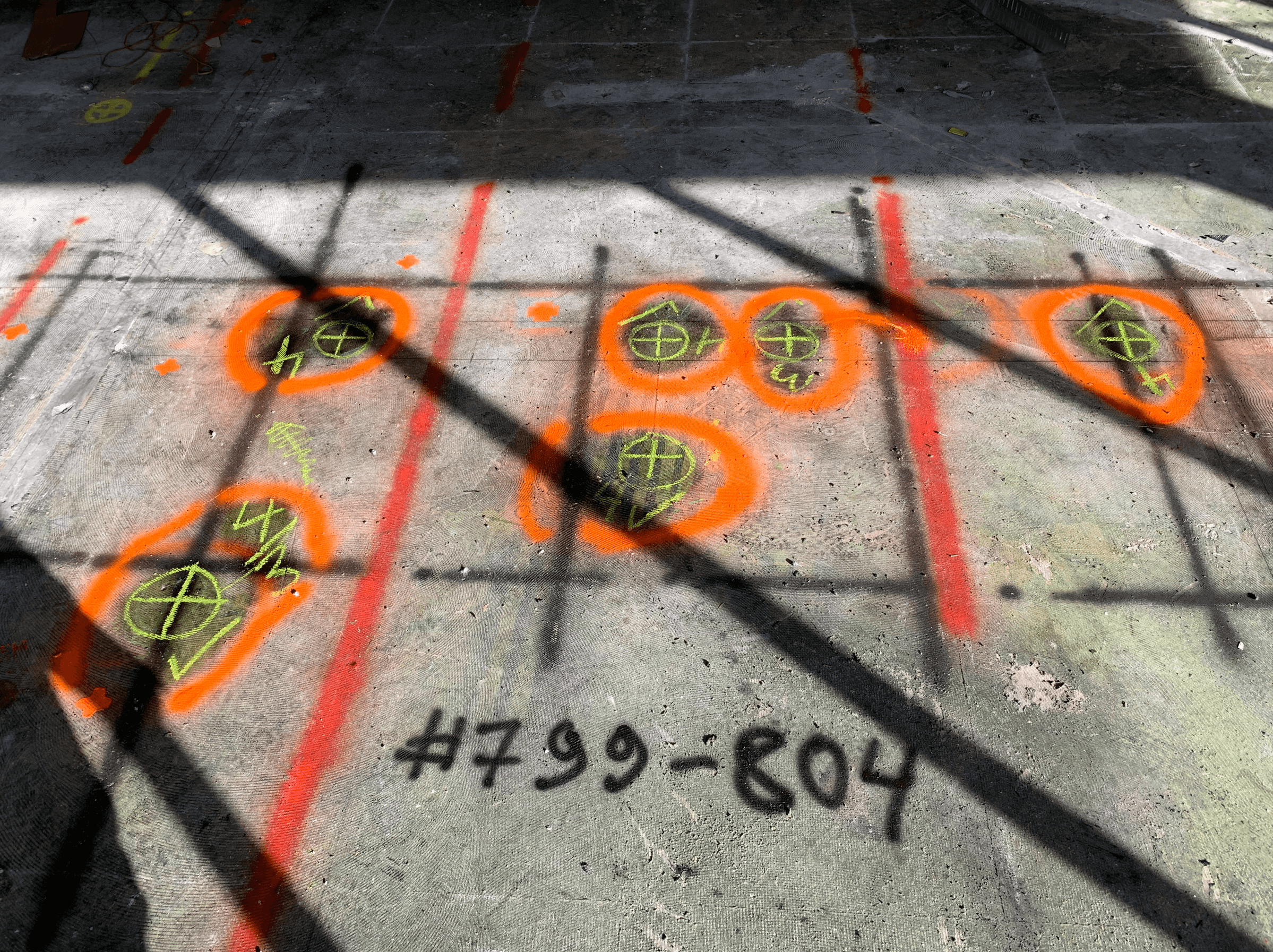
Contact Scantec for professional concrete scanning in Calgary , Emonton, and Vancouver backed by experience, proven methods, and clear on-site marking.
Calgary: 587-917-1486
Edmonton: 780-246-2486
Vancouver: 236-979-2486
Email: info@scantecgpr.com
PROJECT